Openreach’s lithium battery ban 6 months later
Author

Amelia Streeter Smith
Share


When Openreach decided to levy a lithium battery ban in their exchange racks last September, the industry’s reaction was immediate, and emotional.
The mandate landed with surprise urgency, with Openreach customers given a narrow 48-hour timeframe in which to complete removals. This raised a fair question: was the directive a measured technical decision, or was it a precautionary overcorrection?
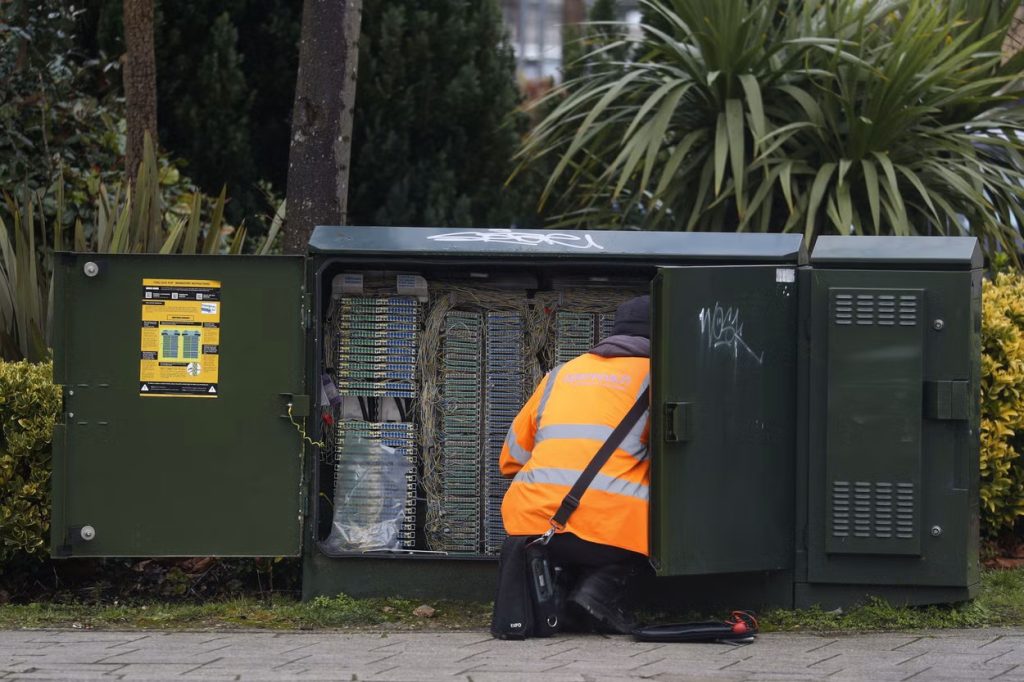
Was the lithium battery ban knee-jerk, or a nuanced response?
The blanket-ban approach ignored differentiations between lithium-ion (NMC) and lithium iron phosphate (LiFePO₄), their different behaviors under stress conditions, and well-documented distinctions in thermal stability and failure modes. From a chemistry standpoint, treating all lithium battery types equally was reductive, and the single risk profile grouping seemed technically simplistic to many.
However, this wasn’t random. Increasing scrutiny from building safety regulators, insurance underwriters, and fire compliance authorities puts critical national infrastructure operators under growing pressure. In addition to intransigent ESG expectations, even low-probability failure modes can carry unacceptable consequences in high-density exchange environments.
With these contexts, Openreach’s move looks less like panic and more like pre-emptive risk containment. As rapid as it was, the directive reflects a broader shift: zero tolerance for ambiguity in risk modelling.
Lithium isn’t the issue. Trust is.
The decision in September 2025 signals something that goes much deeper than a simplistic about-turn made in haste. Lithium isn’t dead in exchanges; but uncontrolled, or poorly contextualized lithium solutions are.
As appetite for ambiguity shrinks as quickly as the margins that once afforded it room, the lean is more and more toward play-it-safe black and white thinking. Because when it comes to safety certifications, system integrations, and failure containment, operators need absolute clarity.
What’s next, where will it leave the market, and what’s the strategy?
Even though the initial action felt blunt, it could prove constructive for the industry. Impactful re-evaluations such as this accelerate improvements through engineering standard, safety validation, and procurement frameworks.
Crucially, The next phase is likely to involve tighter compliance. A doubling down on fire-segmented installation standards, chemistry-specific evaluation, certified rack-integrated systems, and enhanced battery management systems feels inevitable. For vendors, operators will demand non-negotiable product assurances. The likes of lifecycle data, containment strategies, and transparent failure modelling will be as compelling to procurement teams as the technology’s specifications.
But it’s important to state that this is not about performance versus safety. It’s a move from ‘battery supply’ to ‘engineered power systems’.
If the telecoms power market is entering a new phase where system design matters more than chemistry, then Openreach’s mandate was a response to real systemic pressures. Driven by legitimate safety and fire risk concerns within critical national infrastructure, the reality of the directive was more nuanced, with even low probability failure modes carrying too much risk.
The blanket lithium battery ban (coupled with the urgency of the 48-hour removal period) raised industry volume levels around the instruction being an extreme overcorrection. In substance, however, Openreach’s decision reflects tighter governance and compliance criteria: not a definitive rejection of all lithium technologies.
Author: Amelia Streeter Smith
Amelia’s 25-year career spans telecoms, utilities, and transports sectors. Along the way, she also secured major contracts within the fiber telecommunications industries, and in 2025, joined the Technetix family to help strengthen our European footprint. Off the clock, she enjoys watersports, competitive clay shooting, and cooking.